Time and Again Breece D j Pancake Video Trailer
A Ghost Is Born
The Nerveless Breece D'J Pancake: Stories, Fragments, Messages By Breece D'J Pancake. New York: Library of America. 384 pages. $25.

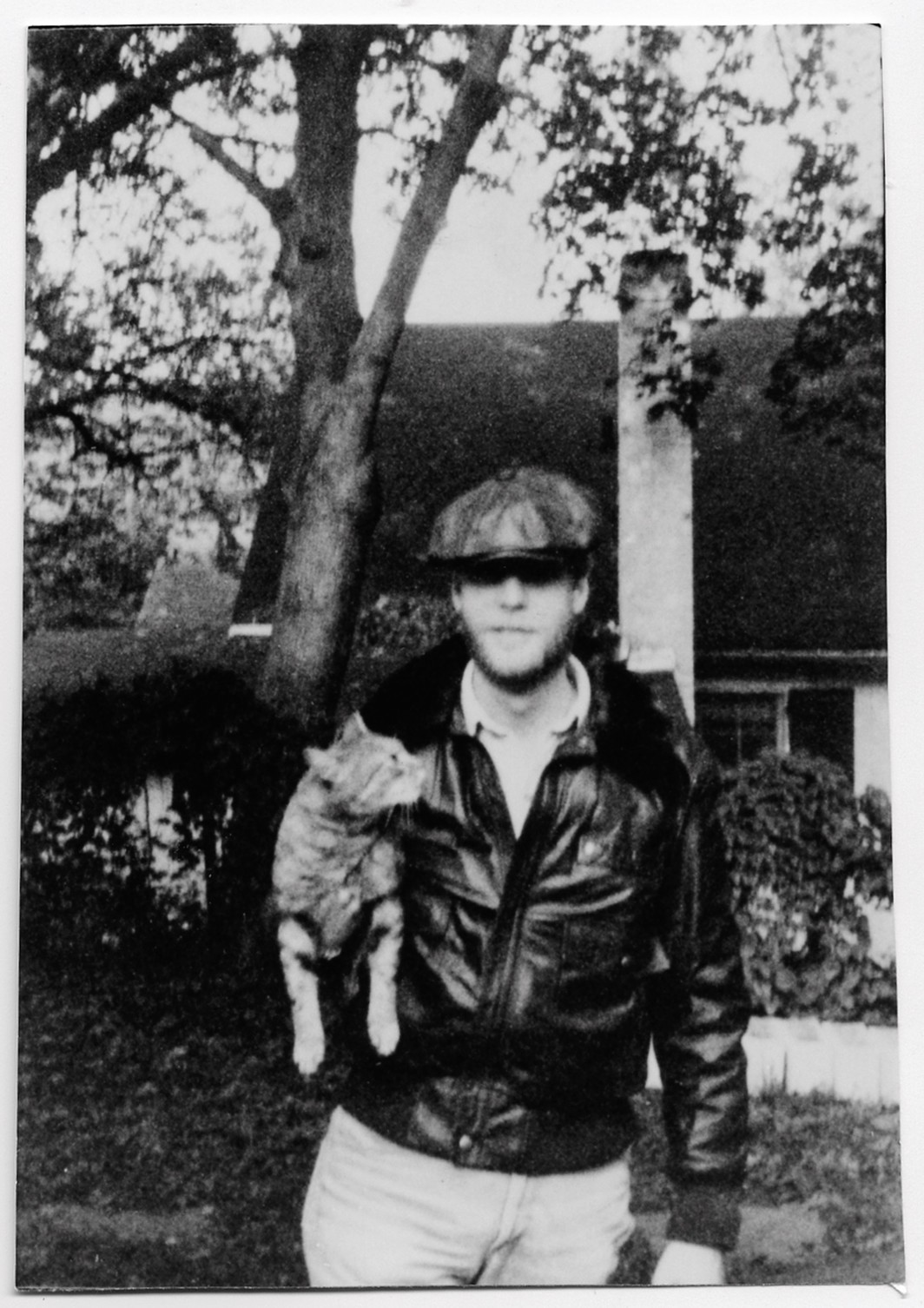
IN 1975, BREECE D 'J PANCAKE was a twenty-three-year-old English teacher at Staunton Military Academy in the Shenandoah Valley. He was one-half a day's drive from Milton, West Virginia, where he'd grown upward. He hated the brutal, stultifying culture of the school, but the job was enough to support himself every bit long as he lived cheaply, which was of import considering his father had multiple sclerosis and could no longer piece of work. His parents, Helen and C. R., said they were getting by, but he worried about their long-term financial security. Pancake was a loner, a dreamer, a contrarian, a depressive—in short, a writer. The other skilful matter about Staunton was that information technology left him enough of time to write. Nobody could accept known this at the time, but he was at the height of his productivity. Between 1974 and 1976 he either started or finished nine of the twelve stories that constitute his life'southward work, a small-scale bright star in the firmament of twentieth-century American short fiction, now in a new edition from the Library of America.
But allow'south linger a while longer in 1975. Pancake had introduced himself to John Casey, who chaired the creative-writing program at the University of Virginia in nearby Charlottesville. Casey was so impressed by Pancake's work that he invited the immature author to sit in on his fall workshop. Just equally the term was starting, Pancake's father died from complications of his illness. Less than three weeks later, Pancake's good friend Matthew Heard died in a car accident. The double loss was crushing. In his female parent's words: "That liked to kill that boy." He started going to a local Presbyterian church. "Don't fall over," he wrote to her about it. "I just idea it would shell sitting in my room all morning."
Pancake practical to the graduate programs at UVA and Iowa. He was accepted to both, merely Iowa couldn't promise funding. The money was important, but perhaps not as of import as the opportunity to stay nigh his widowed female parent and to written report with John Casey, in whom he at present sought a surrogate father. Pancake started graduate schoolhouse at UVA in the fall of 1976, where he also worked with James Alan McPherson and Peter Taylor. He had a stint as an banana to the novelist Mary Lee Settle. He listened to a lot of his favorite singer, Phil Ochs, who had committed suicide in Apr. He studied the style and structure of his favorite novel, Waiting for Nothing by Tom Kromer, which is defended "to Jolene, who turned off the gas." A relentless self-mythologizer, Pancake exaggerated both his poverty and his drawl. He struggled to keep a handle on his drinking. He became an initiate of the Catholic church, taking the name John at his confirmation.
Breece Dexter John Pancake. D. J. became D'J due to a typo on the proof pages of his brusk story "Trilobites," which McPherson and Casey had helped him sell to The Atlantic. He thought the mistake was funny and somehow fitting, then he let it stand and claimed it as his ain. "Trilobites" was published in December of 1977. Information technology was a huge accomplishment and people at UVA were shocked and impressed, though not as shocked and impressed as Pancake had hoped they would be. He was paid $750 for the story. He donated all the money to his church building.
In 1978 The Atlantic bought "In the Dry," a grim story whose title comes from a grim passage in the Gospel of Luke. There were inquiries from publishing houses. The New Yorker nibbled but didn't bite. He applied to the Millay Colony and the Fine Arts Piece of work Center. He proposed to his girlfriend but her father nixed the engagement. His drinking worsened. Things started to spiral. He outlined some novel ideas, drafted chapter openings, revised old manuscripts, just was slowing downward. He read submissions for the Virginia Quarterly Review. He was a prolific giver of gifts: fossils he found, fish he caught, wild game he shot with 1 of the many guns he owned. He once gave a gun to McPherson, who didn't want it. He somewhen gave away every gun in his possession save for the double-barreled shotgun with which he shot himself on Palm Dominicus, 1979. He was twenty-half-dozen years old.
THE STORIES OF BREECE D 'J PANCAKE was published in 1983, with a foreword by McPherson and an afterword by Casey, who was—and still is—Pancake's literary executor. The book independent the six stories Pancake had published during his lifetime: "Trilobites," "In the Dry," "The Marking," "Hollow," "The Way It Has to Exist," and "Time and Again." These were supplemented by another six that Casey admitted were probably not up to Pancake'south own exacting standards only existed every bit consummate drafts and had seen at least some substantial revision. These were "Fox Hunters," "The Scrapper," "The Honored Expressionless," "A Room Forever," "The Salvation of Me," and "Start Solar day of Winter." Beyond that, nada existed but a few dozen pages' worth of fragments and juvenilia.
In the New York Times Book Review, Joyce Carol Oates compared Pancake'south debut to Hemingway'southward In Our Time: "the writing, lean, taut, pared back, most-flawless in its uninflected cadences, is perfectly suited to its content." She noted that the collection was "necessarily an uneven gathering" but that "the nigh powerful of the stories . . . are as compactly and tightly written as prose poems and should be read (and reread) with farthermost intendance."
Pancake's depictions of the civilisation and geography of Appalachia and the Trans-Allegheny were all but unprecedented. The hills and hollows of West Virginia were largely neglected in American literature, even the intensely regionalist literatures of the Due south, possibly because West Virginia had fought with the Union during the Ceremonious State of war, and and so had little to contribute to the revisionist horseshit of Lost Cause sentimentality. Pancake seems to know everything most this identify, from its hilltops to its coal mines to its barrooms, and he has an centre for the small, sharp details that bring information technology to life. In "Hollow," when Buddy wakes up on the floor of his trailer later a night of drinking and brawling, there is "a fiddling ball of rayon batting against his nostril as he breathed." Bo, in "Fox Hunters," "stepped onto the pavement feeling tired and moved a few paces until headlights flooded his path, showing up the highway steam and making the road give birth to little ghosts beneath his feet." At the same time, Pancake is ever attentive to the natural world. He finds a kind of holiness in the history-dwarfing scale of geologic time. Here'due south a justly famous passage from "Trilobites":
I lean dorsum, attempt to forget these fields and flanking hills. A long time before me or these tools, the Teays flowed here. I tin well-nigh experience the cold waters and the tickling the trilobites brand when they clamber. All the h2o from the old mountains flowed due west. But the land lifted. I accept merely the bottoms and stone animals I collect. I blink and breathe. My father is a khaki cloud in the canebrakes, and Ginny is no more to me than the bitter odour in the blackberry briers up on the ridge.
"Trilobites," like many of Pancake'southward stories, is gear up in the town of Stone Camp, his fictionalized version of Milton. Colly, the narrator, has lost his male parent and there's pressure level to sell the failing family subcontract. Ginny, his onetime sweetheart, has moved to Florida without him. He'due south hardly out of high school and already feels futureless. When Ginny comes dorsum to town to visit her parents, she takes Colly out for a cornball drive and they end upward having sexual activity amid the rubble of an abandoned train depot, though Ginny's nostalgia starts to curdle after she cuts her arm on a piece of glass, and Colly becomes acutely aware that he is being used. "She isn't making love, she's getting laid. All correct, I recall, all right. Get laid. I pull her pants effectually her ankles, rut her." Colly retreats into a fantasy near a friend'due south underage sister just that prototype speedily dissolves into a traumatic childhood retentivity of his father whipping him; the physical terror he felt as a boy somehow rhymes with the inchoate emotional hurting he'southward indelible at present. It's one of the loneliest sexual practice scenes I've ever read. (Another contender for that thorny crown is in this same book, in the story "A Room Forever.") Afterwards, Ginny drives off, leaving Colly to walk dwelling house from the depot. He seems markedly less lonely every bit shortly as he is actually alone, and the story closes on a moment of hard-earned, breath-catching poetry. I don't retrieve that quoting it quite does information technology justice, but read "Trilobites" yourself and see if you don't agree that its ending is upwardly there with Cheever's "Goodbye, My Blood brother," Baldwin'southward "Sonny'southward Blues," or Amy Hempel's "In the Cemetery Where Al Jolson Is Buried."
"Hollow," "The Honored Dead," and "In the Dry out" all rank easily amidst Pancake'southward strongest work. They're vivid by any standard, and when you stop to think that they were written by a guy less than halfway through grad school or his twenties—holy shit. Just and so you've got stories like "Trick Hunters" and "A Room Forever," which are powerfully conceived just awfully executed, while a few others are, to put it plainly, not very good. "Time and Again," for example, is about a snowplow-driving serial killer who keeps hogs at habitation to consume his victims' remains. "The Way Information technology Has to Exist" is nigh a guy who wants to impale some other guy but his woman thinks he shouldn't, so he has to kill her, too. They're both silly noir exercises cocky-closeted to their own condition equally camp. I understand why Casey included them, and at this late date they're inappreciably worth criticizing, simply I have to believe that if Pancake had lived he would exist embarrassed by them today.
In his foreword, McPherson reminisces about how he and Pancake bonded as outsiders in snooty, genteel Charlottesville. (Pancake was poor; McPherson was Black.) But McPherson likewise admits that "at that place was a mystery about Breece Pancake that I will not claim to take penetrated. This mystery is not racial; it had to do with that small room into which his imagination retreated from time to fourth dimension. I always idea that the gifts he gave were a way of keeping people abroad from this very personal surface area, of focusing their attention on the persona he had created out of the raw materials of his best traits." McPherson mentored Pancake but would non allow himself to be drawn into the chaos of his student's life. Pancake sensed and resented that a purlieus had been drawn, occasionally lament in his letters of McPherson'due south detachment.
John Casey, for his part, drew no such boundary. "He was about to turn twenty-vii when he died," Casey writes in his afterword. "I was twoscore. But one-half the time he treated me (and I treated him) as if I were his kid brother." When Pancake converted to Catholicism, he asked Casey to be his godfather. "This godfather organisation soon turned upside down. Breece started getting subsequently me about going to mass, going to confession, instructing my daughters. It wasn't so much out of righteousness as out of gratitude and affection, just he could be baking. And then penitent."
McPherson won the Pulitzer Prize in 1978 for his second story collection, Elbow Room, and so never published another book of fiction. He left UVA for Iowa and taught in that location until he died in 2016. John Casey won the National Book Honor in 1989 for a novel I had never heard of before I read his Wikipedia page to write this review. He retired from UVA in 2022 amid a storm of sexual-harassment allegations. I mention these things only to make the signal that we're far past the 24-hour interval when Pancake requires their literary bona fides to vouch for his. The student is far more widely read than either of his old teachers are, or probably ever were. The enduring value of the foreword and afterword then are as primary-source documents, bystander accounts. The Stories of Breece D'J Pancake has been in print for nearly twoscore years and every edition that I'm aware of contains both McPherson's and Casey's essays. At this point, they feel as much a role of the volume as the stories themselves. For better or worse, their intimacy and reverence establish the collection as a reliquary: they are the gilded box and velvet pillow that hold the sacred bones.
And so hither they are over again in the Library of America's Collected Breece D'J Pancake: Stories, Fragments, Letters, along with a new introduction past Jayne Anne Phillips. She is a fellow West Virginian, born the same year as Pancake, and though their lives never intersected, she gamely recounts the missed connections. His first, abortive attempt at higher was at West Virginia Wesleyan in the boondocks of Buckhannon, where she was a senior in high school at the time. If he had gone to Iowa instead of UVA he would have been in her cohort. If he hadn't killed himself, and if he had chosen the Fine Arts Work Centre fellowship over the Millay fellowship (he was accepted to both) they would accept met in Provincetown in the fall of '79. This trivia is mannerly in its manner, but I'd accept been more than charmed by information technology if she hadn't gotten the date of his death wrong past two months, or led with the fatuous assertion that "Breece Pancake'due south stories comprise no less than an American Dubliners."
There'south no shortage of things to adore in Pancake's piece of work, only it is (equally Oates observed) uneven, and in some cases (as Casey admitted) clearly unfinished. Phillips is admittedly right that "his stories build their ain rhythm and throb, shift past to far past to present in ghostly dissolves, sculpt their lonely, ineffable power." But she's wrong to say that he was "never, truly, anyone's amateur." In fact he was drastic to exist held in the mastering easily of aesthetic and moral authorization—Casey's, McPherson's, Ochs'due south, Kromer's, Christ's—and part of the value of these stories is their well-preserved fossil record of those several overlapping and sometimes contradictory apprenticeships. Pancake's stories offer a rare glimpse of genius in late gestation, fighting to exist born. The rough edges, loose ends, faux steps, and psychic cocky-exposure are all office of that difficult nascence, and it inappreciably diminishes the writer or the work to say so. One does the stories no favors past belongings them to a standard of private excellence and collective effect that they cannot possibly meet.
What would be authentic to say, however, is that Pancake himself—and the general tenor of Pancake worship—strongly resembles the portrayal of Michael Furey in "The Dead," the final story in Dubliners. Similar Furey, Pancake was a beloved boy lost at the top of his hope. Any serious try at assessing the piece of work is shadowed, if not overshadowed, by this romantic grief. John Casey in one case said, of Pancake'south splattered blood and encephalon affair, "If I could accept eaten some of information technology off the wall that night, I would have."
I don't doubtfulness for a moment that he meant it, but Jesus fucking Christ.
I '1000 GLAD TO SEE Breece D'J Pancake in the Library of America, where he surely belongs, merely I wish that more intendance had been put into this book. I mentioned before that Phillips got the appointment of Pancake's death incorrect. Anyone can accidentally type "June" when they mean "Apr," simply she specifies that he died "xx-ane days before his 20-seventh birthday," which tells me that she really idea this was correct, and besides that her introduction wasn't fact-checked, since the correct date is given in McPherson's foreword a few pages later. April 8, 1979, is of import not simply because information technology is accurate, and because it was Palm Sunday, but also because Phil Ochs committed suicide on April 9, 1976. Anyone who has studied Pancake knows how pregnant that date would have been to him, and anyone who has had a suicidal depressive in their lives knows how easily a fraught anniversary can become a trigger. To be clear: this isn't Phillips's fault; she wrote the introduction, merely she is non the editor. In fact, no editor is credited on the volume, which likely explains why it likewise lacks a chronology, bibliography, or biographical essay. The absence of a guiding curatorial intelligence is palpable and much lamented.
It is certainly squeamish to have the selected letters in the same spine every bit the stories, simply who—other than a Pancake super fan—is going to read them? The messages contain flashes of insight into Pancake's writing procedure and inner life, simply few are objects of literary merit in their own correct and those that are accept been widely circulated and quoted from for as long as his stories have been in print. I'm thinking in particular of Pancake's final letter to his female parent, from March, 1979. He writes that he has dreamed of a "happy hunting basis," a kind of cross between Eden and Ezekiel's valley of dry bones, where "y'all could shoot without gun, never impale, but the rabbits would practice a little trip the light fantastic toe, all as if it were a game, and they were playing information technology also. Then Winter came with heavy powder-snow, and big deer, horses, goats and buffaloes—all white—snorted, tossed their heads, and I lay downwardly with my Army blanket, made my bed in the snowfall, then dreamed within the dream." This is gorgeous on its own terms, and in light of his suicide, it is heartrending. But information technology besides strikes me as deeply naive: a fantasy of deportment without consequences, which is a child'south—or an alcoholic's—thought of freedom.
(For a better selection of Pancake's letters, and a proper biography, i must expect to Thomas E. Douglass'southward A Room Forever: The Life, Work, and Letters of Breece D'J Pancake. I likewise recommend two excellent essays: "Breece D'J Pancake" by Cynthia Kadohata, which appeared in Mississippi Review in 1989, and "The Undercover Handshake" past Samantha Hunt, which appeared in The Believer in 2005. Both are bachelor for free online.)
Because Pancake's productive flow was so full-bodied, it's no surprise that the stories are largely of a piece in their concerns and arroyo or that they tend to the same fix of psychic wounds. Fully half the stories feature characters who have lost ane or both parents. There are several in which the narrative slips abroad from the protagonist's point of view into that of a nearby beast (bobcat, possum, pull a fast one on) that is observing him. Hills and fields are full of arrowheads, fossils, and Indigenous burying mounds. He loves the word "ghost," which is always used figuratively, and the word "whore," which unfortunately never is. Poverty is pandemic. Bourbon is breakfast. Sexual activity is repulsive yet overpowering—something y'all cannot help just want and cannot help simply hate yourself for wanting, so inevitably you as well end up antisocial whoever gives it to y'all. Everyone is staggering through what Samantha Chase rightly calls "a landscape strewn with derailed hope."
On this reread I found myself most drawn to "The Marking" and "The Conservancy of Me," two lesser-sung stories that stand out in part considering they're the least like to the other ten, or to each other. "The Marking" is lurid and flawed even so it leaves me awestruck every time I read it. Reva is married to a human being she doesn't honey and haunted by memories of teenage incest with her old brother. Every paragraph pulses with Southern-gothic melodrama. Reva loses a pregnancy, watches monkeys accept a threesome at a traveling carnival, tortures herself with fantasies of her brother sleeping with prostitutes, and finally sets fire to the family barn. The story ends with her sitting on the front end porch steps watching the befouled burn. Jackie, a farmhand, is trying to get her on her anxiety. She's looking up at him. "His huge head hid the moon, and, when she cried against him, the burn down." At that place'due south one more line later this one, and if I were the editor I'd have cut information technology, but permit's get alee and phone call this a perfect catastrophe anyway.
"The Conservancy of Me," which Pancake began writing in tardily 1975, is notable less for the story it tells than the way it tells information technology. He experiments with an associative, vocalism-driven way that feels more like Saul Blare or Barry Hannah than Ernest Hemingway or Andre Dubus. Information technology is such a stark departure from his standard way that ane suspects he was trying to imitate something he'd read, quite perhaps one of the two men aforementioned, though information technology could have been some dark horse like Grace Paley or Thomas McGuane. Just heed to this:
All I know for sure is that Chester fabricated it large, and came back to evidence it off, and that I never hated him more in the years he was gone than I did in the two hours he was home. The fact that without Chester I had twice as many cars to set, half as much gas to pump, and nobody to route-race or play chicken with on weekends fabricated upwardly for itself in giving me all my own cigarettes, since Chester was the only bum in the station.
I'm frankly shocked at how well Pancake takes to the rhythms of wisecracking and the kinetic energy of improvisation. An ex-drinker is described every bit "stoned sober out of his mind." The narrator marries and divorces inside the span of a single antic paragraph.
When I think of the lost potential of Breece D'J Pancake, I think of "The Mark" and "The Salvation of Me." I'one thousand not interested in the final polish he would have put on his rough gems, or how the fragments might have blossomed into drafts. I have never one time tried to imagine the fully fleshed-out plots of the two novels he outlined. The only Pancake that I'm interested in imagining is the one who surely shocked himself when he looked down and saw he'd written that penultimate line of "The Mark," or that get-go typhoon of "The Salvation of Me." I imagine him reading over his pages and thinking, Hell, I didn't know I could do that. And then venturing a 2nd thought: I wonder what else I don't fifty-fifty know I can do. This version of Pancake grows and changes over years and decades. He continuously renews his vocation, is always willing to accept chances and leave himself susceptible to cocky-surprise. Would nosotros take gotten that body of work if he had lived? Impossible to say, pointless to speculate. But isn't it pretty to call up so.
Justin Taylor is the author of Riding with the Ghost (Random House, 2020).
Source: https://www.bookforum.com/print/2704/revisiting-the-short-promising-career-of-breece-d-j-pancake-24270
0 Response to "Time and Again Breece D j Pancake Video Trailer"
Post a Comment